


Have you ever noticed how one confident thought can change the way you walk, speak, and make choices? Confidence affirmations help create that shift by shaping a stronger inner voice.
They support self-belief by replacing hesitation with steady, supportive thoughts. Confidence is not about being fearless or perfect. It is about trusting yourself even when situations feel uncertain.
Daily affirmations help reinforce that trust through repetition and awareness. They work quietly, shaping how you respond to challenges, conversations, and decisions.
Over time, confidence affirmations help reduce self-doubt and encourage clearer thinking. This blog explores how confidence affirmations work, why they matter, and how you can practice them daily to build lasting self-belief that feels natural and reliable.
What Are Confidence Affirmations?

Confidence affirmations are positive statements that help strengthen self-belief and inner trust. They focus on your ability to handle situations, make decisions, and show up without constant doubt.
These affirmations guide the mind toward supportive thinking instead of self-criticism. Over time, repeated thoughts shape habits, and confidence affirmations help form habits rooted in self-trust.
Affirmations can be short or detailed. Some begin with “I,” while others state truths without personal pronouns. Both formats work well. The purpose is not to ignore challenges but to approach them with belief rather than fear.
Confidence affirmations remind you that progress comes from effort, learning, and consistency. With regular practice, they help build a mindset that feels steady, realistic, and supportive during both routine moments and challenging situations.
Why Confidence Affirmations Matter
Confidence affirmations matter because the way you speak to yourself influences how you act. Negative self-talk can quietly limit choices, create hesitation, and reduce motivation.
Confidence affirmations interrupt those patterns by encouraging balanced and supportive thoughts. They help you respond to situations with clarity rather than second-guessing.
When practiced consistently, affirmations help reduce mental pressure. They reinforce the idea that mistakes do not cancel growth. Confidence affirmations also support emotional stability by helping you trust your judgment. This trust improves communication, decision-making, and personal boundaries.
Over time, confidence built through affirmations feels calmer and more reliable. It does not rely on approval or comparison. Instead, it grows from self-awareness and repeated positive reinforcement. This makes confidence affirmations a valuable tool for long-term personal growth and everyday resilience.
How to Practice Confidence Affirmations Daily
Practicing confidence affirmations daily works best when the routine feels simple and consistent. Start by selecting affirmations that feel believable and supportive. Statements that feel too extreme can create resistance, so begin with thoughts that feel steady and realistic.
Morning practice helps set direction for the day. Repeating affirmations while getting ready, during a short walk, or before starting work can support focus and self-belief. You can say them aloud, repeat them silently, or write them down. Writing affirmations slows thinking and helps the message settle more deeply.
Affirmations can also be linked to daily habits. Repeat them before meetings, while planning tasks, or during short pauses. This helps build confidence during real situations rather than only in quiet moments. Evening practice is useful for reflection. Repeating affirmations at night helps release doubt from the day and prepares the mind for rest.
Consistency matters more than quantity. A few affirmations practiced daily are more effective than many used occasionally. Speak calmly and without pressure. Over time, confidence affirmations reshape inner dialogue, making self-belief feel natural and dependable.
Tips to Make Confidence Affirmations More Effective
Confidence affirmations work best when they are practiced consistently and with genuine intention. Start by choosing affirmations that feel believable and aligned with your current mindset.
Statements that feel too extreme can create resistance, while realistic affirmations encourage steady growth. Repeating confidence affirmations daily, especially in the morning or before important tasks, helps set a positive mental tone.
Speak affirmations clearly and with focus, allowing yourself to absorb each word instead of rushing through them. Pairing affirmations with deep breathing can help calm the mind and strengthen emotional connection. Writing affirmations down or reading them slowly from a journal can also improve their impact by increasing awareness.
It is important to support affirmations with action. Small confident choices during the day reinforce positive beliefs. Avoid negative self-talk between affirmation sessions, as it can undo progress. With patience and regular practice, confidence affirmations help build self-belief, clarity, and emotional strength over time.
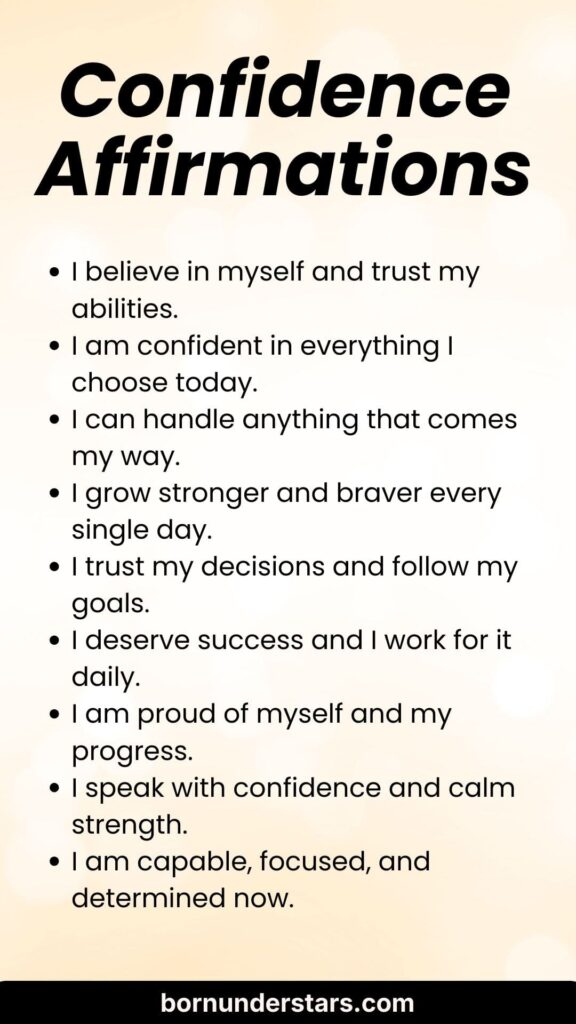
Confidence Affirmations
- I trust myself to handle situations with clarity and calm.
- My confidence grows through steady effort.
- I believe in my ability to learn and adapt.
- Confidence builds each time I show up.
- I trust my judgment in daily choices.
- My voice deserves to be heard.
- I allow confidence to grow naturally.
- Self-belief supports my actions.
- I stay calm when facing challenges.
- Confidence feels steady and realistic.
- I trust myself to speak honestly.
- My decisions deserve respect.
- I move forward without constant doubt.
- Confidence supports clear thinking.
- I rely on preparation and effort.
- Self-belief grows through consistency.
- I trust my ability to improve.
- Confidence does not require perfection.
- I allow myself to be visible.
- Confidence supports balanced reactions.
- I believe in my progress.
- My presence matters.
- I stay grounded under pressure.
- Confidence builds through experience.
- I trust myself during uncertainty.
- Self-belief strengthens daily.
- I speak with clarity and purpose.
- Confidence grows when I stay prepared.
- I allow confidence to feel calm.
- I trust my instincts.
- Confidence supports healthy boundaries.
- I handle feedback with balance.
- Self-belief guides my choices.
- I rely on effort rather than fear.
- Confidence grows quietly.
- I trust my perspective.
- Confidence supports clear communication.
- I allow myself to learn publicly.
- Self-belief reduces hesitation.
- I trust my pace.
- Confidence helps me stay focused.
- I move forward thoughtfully.
- Self-belief supports resilience.
- I trust myself to adjust.
- Confidence grows with patience.
- I speak without overthinking.
- Self-belief feels steady.
- I trust my preparation.
- Confidence supports consistency.
- I believe in my abilities.
- Confidence allows progress.
- I trust myself during change.
- Self-belief reduces fear.
- Confidence feels grounded.
- I allow myself to succeed.
- Confidence supports decision-making.
- I rely on my experience.
- Self-belief shapes calm action.
- I trust my effort.
- Confidence does not depend on approval.
- I speak with assurance.
- Self-belief grows daily.
- Confidence supports clarity.
- I trust myself to respond well.
- Confidence grows through practice.
- I allow confidence to exist quietly.
- Self-belief supports my goals.
- I trust my voice.
- Confidence keeps me steady.
- I believe in consistent effort.
- Self-belief feels realistic.
- I trust my learning process.
- Confidence supports progress.
- I allow myself to lead.
- Self-belief improves focus.
- I trust my choices.
- Confidence feels calm and real.
- I speak clearly.
- Self-belief guides my actions.
- Confidence grows through awareness.
- I trust my strengths.
- Confidence supports balance.
- Self-belief reduces self-doubt.
- I rely on preparation.
- Confidence builds steadily.
- I trust my growth.
- Self-belief feels supportive.
- Confidence allows adaptability.
- I speak with intention.
- Self-belief shapes resilience.
- Confidence supports patience.
- I trust myself fully.
- Confidence grows without pressure.
- Self-belief stays consistent.
- I rely on steady effort.
- Confidence feels dependable.
- I trust my skills.
- Self-belief grows over time.
- Confidence supports self-respect.
- I believe in myself.
Daily Confidence Affirmations for Women
- I trust myself to move through today with confidence.
- My voice matters in every space I enter.
- Confidence grows through consistent effort.
- I allow myself to take up space.
- My presence supports my confidence.
- I trust my decisions today.
- Confidence feels calm and steady.
- I believe in my ability to adapt.
- My thoughts support self-belief.
- I show up with assurance.
- Confidence does not require perfection.
- I speak with clarity and purpose.
- Self-belief guides my actions.
- I trust my preparation.
- Confidence grows through practice.
- I rely on effort rather than doubt.
- My confidence supports healthy boundaries.
- I remain steady under pressure.
- Confidence builds each day.
- I trust myself to respond well.
- Confidence feels realistic.
- I value my perspective.
- Self-belief strengthens daily.
- I trust my inner voice.
- Confidence supports balance.
Morning Confidence Affirmations to Start Strong
- I begin the day feeling focused and confident.
- Confidence guides my first decisions today.
- I trust myself as the day starts.
- My energy supports confident action.
- I feel prepared for today.
- Confidence grows as the morning begins.
- I speak with assurance.
- My mindset supports self-belief.
- I allow confidence to guide me.
- I begin today without hesitation.
- Confidence feels calm this morning.
- I trust my abilities.
- My thoughts support clarity.
- I step into today confidently.
- Confidence supports focused action.
- I rely on preparation.
- I begin today with assurance.
- Confidence does not depend on outcomes.
- I trust myself to manage today.
- Confidence sets my pace.
- I choose belief over doubt.
- My confidence feels grounded.
- I start the day with clarity.
- Confidence supports thoughtful action.
- I trust my process today.
Confidence Affirmations for Self-Belief
- I trust myself to handle challenges.
- Self-belief grows through experience.
- I believe in my learning process.
- Confidence builds from within.
- I rely on my abilities.
- Self-belief supports progress.
- I trust my instincts.
- Confidence feels steady.
- I allow belief to guide me.
- Self-belief reduces hesitation.
- I trust my growth.
- Confidence grows through practice.
- I believe in my effort.
- Self-belief feels consistent.
- I trust myself during uncertainty.
- Confidence does not require approval.
- I rely on preparation.
- Self-belief shapes decisions.
- I trust my direction.
- Confidence supports patience.
- I believe in myself daily.
- Self-belief strengthens focus.
- I trust my progress.
- Confidence grows quietly.
- I believe in steady improvement.
Confidence Affirmations for Self-Worth
- I value myself without conditions.
- Self-worth does not depend on results.
- I respect my effort.
- My value remains steady.
- I treat myself with respect.
- Self-worth supports confidence.
- I trust my contribution.
- My value is consistent.
- I rely on self-respect.
- Self-worth feels stable.
- I respect my boundaries.
- My value does not fluctuate.
- I trust my intentions.
- Self-worth supports calm action.
- I value my presence.
- Self-worth grows with awareness.
- I trust my standards.
- My value remains unchanged.
- Self-worth guides choices.
- I respect my pace.
- Self-worth feels grounded.
- I trust my principles.
- My value feels secure.
- Self-worth supports balance.
- I value myself daily.
Confidence Affirmations for Public Speaking
- I speak clearly and confidently.
- My voice deserves attention.
- Confidence guides my delivery.
- I trust my preparation.
- Speaking feels manageable.
- I remain calm while speaking.
- My message matters.
- Confidence supports my expression.
- I trust my pacing.
- Speaking feels controlled.
- I communicate with clarity.
- Confidence reduces nervousness.
- I trust my content.
- Speaking feels natural.
- I stay grounded while presenting.
- Confidence guides my words.
- I trust myself in front of others.
- Speaking supports self-belief.
- I focus on clarity.
- Confidence supports strong delivery.
- I manage pauses calmly.
- Speaking feels steady.
- I trust my ability to explain.
- Confidence shapes my presence.
- I speak with assurance.
Confidence Affirmations for Work & Career
- I trust my professional abilities.
- Confidence supports career growth.
- I rely on my experience.
- My effort matters at work.
- I trust my problem-solving skills.
- Confidence guides my performance.
- I speak up professionally.
- My contribution has value.
- Confidence supports collaboration.
- I trust my judgment at work.
- I handle responsibilities calmly.
- Confidence supports learning.
- I trust my role.
- My work reflects effort.
- Confidence grows through experience.
- I manage tasks with assurance.
- Confidence supports communication.
- I trust my direction.
- My performance feels steady.
- Confidence guides leadership.
- I rely on preparation.
- Confidence supports progress.
- I trust my career path.
- My effort supports growth.
- Confidence feels reliable at work.
Confidence Affirmations for Decision-Making
- I trust myself to make decisions.
- Confidence guides thoughtful choices.
- I rely on clarity.
- Decision-making feels manageable.
- I trust my reasoning.
- Confidence supports commitment.
- I allow time to decide.
- My choices feel considered.
- Confidence reduces hesitation.
- I trust my judgment.
- Decision-making feels steady.
- Confidence supports clarity.
- I stand by my choices.
- I trust my values.
- Confidence reduces doubt.
- I allow flexibility.
- Decision-making feels calm.
- I trust my instincts.
- Confidence supports follow-through.
- I rely on preparation.
- Choices feel balanced.
- Confidence grows through decisions.
- I trust my process.
- Decision-making supports self-belief.
- I stand confident in choices.
How Confidence Affirmations Improve Daily Life
Confidence affirmations improve daily life by shaping how you respond to everyday situations. They influence how you speak, make decisions, and interact with others. When self-belief is reinforced regularly, hesitation decreases and clarity improves. This makes daily tasks feel more manageable.
Affirmations also support emotional stability. Instead of reacting impulsively, confident self-talk encourages thoughtful responses. Over time, this reduces stress and improves communication. Confidence affirmations help strengthen boundaries, allowing you to say yes or no with clarity.
In professional settings, affirmations support focus and consistency. They reduce overthinking and improve follow-through. In personal life, they encourage healthier self-respect and decision-making. With steady practice, confidence affirmations become a reliable tool that supports calm, balanced action throughout the day.
Common Mistakes While Using Confidence Affirmations
One common mistake is choosing affirmations that feel unrealistic. When statements feel forced, the mind resists them. Another mistake is expecting instant results. Confidence develops through repetition, not overnight change.
Inconsistency is another issue.
Practicing affirmations only during stress reduces effectiveness. Some people repeat affirmations while continuing negative self-talk throughout the day, which creates mixed messages. Using too many affirmations at once can also feel overwhelming.
Comparing progress with others weakens self-belief. Confidence grows at a personal pace. Affirmations work best when paired with awareness and supportive actions. Choosing realistic statements and practicing them calmly helps build steady, long-term self-belief.
Conclusion
Confidence affirmations help build self-belief by creating a steady, supportive inner voice. With regular practice, they reduce self-doubt and improve decision-making. Over time, affirmations support calm confidence that does not rely on approval. Practiced consistently, they become a reliable tool for personal growth, clarity, and daily resilience.